Summary judgment win in a parking lot slip and fall lawsuit in Bolivar County Circuit Court.
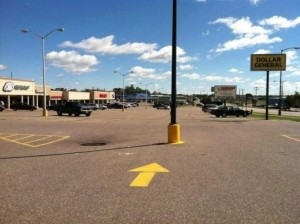 Plaintiff filed suit against a Cleveland, Mississippi business following a slip and fall in its parking lot. Specifically, Plaintiff alleged that he fell over a finger-sized crack with an inch to a 1 ½ inches of separation. Evidence reveled that Plaintiff crossed the business’ parking lot at least 26 times before the fall. Moreover, Mississippi Courts have repeatedly held that pavement cracks and changes in elevation are not dangerous conditions that can support a slip and fall lawsuit. Knight v. Picayune Tire Svcs. Inc., 78 So.2d 356 (Miss. App. 2011). Indeed, “Mississippi has long recognized that normally encountered dangers such as curves, sidewalks, and steps are not hazardous conditions. Often [such pathways] contain cracks and changes in elevation; and as such, they do not become hazardous conditions simply because they contain minor imperfections or defects.” Knight v. Picayune Tire Services, Inc., 78 So. 3d 356 (Miss. App. 2011). See, e.g., City of Greenville v. Laury,172 Miss 118, 159 So. 121, 122 (1935).
In fact, there are at least 17 Mississippi appeal’s court opinions rejecting slip and fall actions over cracks in parking lots and sidewalks:
- Three-inch depression in a sidewalk is not unreasonably dangerous. City of Meridian v. Crook, 69 So. 182 (Miss. 1915)(To hold otherwise “would be equivalent to holding that sidewalks in the residence portion of our cities must not deviate three inches from a perfectly smooth surface … The practical result rendering municipalities insurers of the safety of pedestrians.” Id. at 184).
- Crack in side walk large enough to catch the heel of a pedestrian’s shoe was not unreasonably dangerous. Rowe v. City of Winona, 159 So.2d 282 (Miss. 1964), aff’g directed verdict.
- Seven and One-half inch high side walk crack was not unreasonably dangerous. Stanley v. Morgan & Lindsey, Inc., 203 So.2d 473 (Miss. 1967).
- Differential between sidewalk sections of three to 4 inches are not unreasonably dangerous. City of Biloxi v. Schamback,157 So.2d 386 (Miss. 1963).
- An uneven concrete gap in parking a lot was not unreasonably dangerous. Penton v. Boss Hogg Catfish Cabin, LLC,42 So.3d 1208 (Miss. Ct. App. 2010), Aff’g summary judgment.
- One-inch elevation of a sidewalk did not create a dangerous condition. Bond v. City of Long Beach, 908 So.2d 879 (Miss. Ct. App. 2005).
- A crevice in the street stretching a half-inch to 3 inches by 18 inches to 2 feet was not enough to make a street unsafe. City of Greenville v. Laury, 159 So. 121 (Miss. 1936)(Cited with approval in Knight v. Picayune Tire Svcs. Inc., 78 So.2d 356 (Miss. App. 2011)).
- Elevation change in homeowners’ driveway did not create an unreasonably dangerous condition to hold homeowners’ liable for a fall in their driveway. Ringo v. Wilson, 2016 WL 612093.
- Imperfections to a parking lot are generally not considered unreasonably dangerous conditions. First Nat’l Bank of Vicksburg v. Cutrer, 214 So.2d 265 (Miss. 1968).
- Cracks on the edge of a concrete riser are not unreasonably dangerous condition. First Nat’l Bank of Vicksburg v. Cutrer, 214 So.2d 465 (Miss. 1968).
- A “seam” creating an uneven surface in an asphalt parking lot is not a dangerous condition.Knight v. Picayune Tire Svcs. Inc., 78 So.2d 356 (Miss. App. 2011)).
- Hole between sidewalk sections covered by grass not unreasonably dangerous. City of Meridian v. Raley, 118 So.2d 342 (Miss. 1960).
- Threshold 3/4 of an inch, not unreasonably dangerous such that a slip and fall claim can be maintained. McGovern v. Scarborough, 566 So.2d 1225 (Miss. 1990).
- 3 ½ inch wide and 2 inches deep crackthat caught Wal-Mart customer’s heel not a dangerous condition. Parker v. Walmart Stores, Inc., 267 F. App’x 724 (5thCir. 2008) (granting summary judgment as crack was not a dangerous condition under Mississippi law).
- 2 inches wide, 4.75 inches long, and 0.75 inches deep in restaurant’s sideway, not a dangerous condition. Mack v. Waffle House Inc.,No. 1:06CV559, 2007 WL 1153116 (S.D. Miss. Apr. 18, 2007), (granting summary judgment, as the crack was not a dangerous condition so support slip and fall claim under Mississippi law).
- 10 inches around and 1 ½ inches deep pothole in Burger King parking lot not a dangerous condition. Quick v. Strategic Restaurants Acquisition Co., No. 3:12-cv-301, 2013 WL 1305583 (S.D. Miss. Mar. 28, 2013)(granting summary judgment.).
- 1.5 to 1.75 inch indentation in parking lot at Wal-Mart that caught customer’s foot was not a dangerous condition as a matter of law. Chance v. Wal-Mart East L.P., No. 3:14-cv-363, 2015 WL 4496442 (S.D. Miss. July 23, 2015).
In addition, the Court found that even if the subject crack could somehow be deemed a dangerous condition, the Plaintiff’s numerous prior trips through the parking lot provided him sufficient notice of the parking lot’s condition. The dismissal relied, in part, on the Mississippi Supreme Court’s opinion in Vaughn v. Ambrosino, 883 So.2d 1167 (Miss. 2004)which provides that:
“With respect to the [failure to warn claim], however, it would be strange logic that found it reasonable to allow a plaintiff to pursue a [slip and fall] claim against a defendant for failure to warn of an open an obvious danger. One would struggle, indeed, to justify the need to warn a plaintiff of that which was open an obvious. Stated differently, a warning of an open and obvious danger would provide no new information to the plaintiff. Stated still another way, a thing warned of is either already known to the plaintiff, or it’s not. If it’s already known to the plaintiff, then the warning serves no purpose. If it is not already known to the plaintiff, then the thing warned of was not open and obvious in the first instance. Thus, an invitee may not recover for failure to warn of an open and obvious danger.”
Holcomb Dunbar attorneys Jonathan Masters and Josh Moore presented the successful arguments.
 Jonathan S. Masters Mississippi and Tennessee Attorney