Quick Summary
To choose an attorney, first define your legal matter and match it to an attorney with specific experience in that practice area, then verify the license and disciplinary record through your state bar. Ask about who will handle your case, communication, and billing before signing an engagement letter.
- An attorney is a lawyer licensed to practice law and represent clients; a lawyer may not be licensed.
- Ask how many matters like yours the attorney handled in the past year and the outcomes.
- Confirm who will actually handle your case, since partners may assign work to associates.
- Verify the license is active and check public disciplinary actions on the state bar website.
- Ask for the billing model and scope in writing to avoid unclear-scope billing disputes.
Choosing the right attorney is one of the most important decisions you will make when facing a legal issue. The attorney you select will influence your strategy, your costs, your timeline, and your outcome. This guide walks you through the steps of finding an attorney who fits your legal issue, your budget, and your communication style, so you can move forward with confidence.
Attorney vs. Lawyer: What the Title Actually Means
The terms attorney and lawyer are often used interchangeably in everyday speech, but they carry distinct meanings in the legal profession.
The difference matters more than most people realize.
A lawyer has completed legal education, typically earning a Juris Doctor degree.
An attorney has passed a state bar examination and holds a bar license.
The distinction carries practical weight. Only an attorney can appear in court as your representative, negotiate settlements on your behalf, or sign legal filings for your case.
The term attorney-at-law is the formal designation used in court documents and legal proceedings. You will see it on pleadings, contracts, and official correspondence.
How to Choose an Attorney for Your Legal Matter
Choosing the right attorney starts with understanding your specific legal matter and matching it to the right practice area. A civil dispute over a contract requires different expertise than a probate administration or a workers’ compensation claim. Matching the practice area to the matter is especially important in property transactions, where choosing a closing attorney can help ensure the legal work aligns with the specifics of the sale.
Start by defining what you need. Are you facing litigation? Do you need help with estate planning? Is this a business dispute, a family matter, or a personal injury claim? Each of these legal areas has its own rules, deadlines, and strategies, and an attorney who practices regularly in the relevant area will already know the procedures and the people involved.
Match the Practice Area to Your Case
Legal practice areas are specialized for good reason. An attorney who handles commercial litigation will understand the burden of proof, the evidentiary rules, and the negotiation dynamics involved. An estate planning attorney will know how to structure a will or trust to avoid probate complications.
A personal injury attorney who focuses on car accident cases will know the local courts, the insurance adjusters, and the medical experts who matter. A business attorney who drafts contracts every day will spot a clause that a generalist might miss.
Common practice areas include:
- Litigation and civil disputes: contract disagreements, business torts, construction defects
- Probate and estate administration: wills, trusts, executor duties, estate settlement
- Business and commercial law: entity formation, transactions, collections, bankruptcy
- Insurance defense and coverage: claims disputes, subrogation, bad faith allegations
- Family law: divorce, child custody, support arrangements
When you evaluate a potential attorney, ask directly: how many matters like mine have you handled in the past year? Look for specific answers rather than general claims of experience.
If you are narrowing down which attorney fits your situation, how to choose a probate lawyer in Mississippi walks through what to look for, questions to ask, and how to evaluate candidates step by step.
Specialist vs. General Practice: Weighing the Trade-offs
The choice between a specialist and a general practitioner depends on the complexity of your matter and the stakes involved. A specialist focuses on one practice area, while a general practitioner handles many types of matters.
- Depth of expertise: Specialist — Deep in one area; General Practitioner — Broad across many areas
- Efficiency on complex matters: Specialist — Higher; General Practitioner — May require research time
- Cost structure: Specialist — Often higher hourly rates; General Practitioner — Often more flexible
- Best for: Specialist — High-stakes, technical cases; General Practitioner — Straightforward, routine matters
- Access and availability: Specialist — May have waiting lists; General Practitioner — Usually easier to schedule
A specialist brings focused knowledge and often works with expert witnesses, mediators, and other professionals in the same field. A general practitioner brings broad knowledge and often handles cases for the same client across several areas of law.
For high-stakes litigation or complex probate administration, a specialist is often the better choice. For simpler matters or an ongoing relationship with a single attorney, a general practitioner can offer convenience and lower costs.
Questions to Ask an Attorney Before You Hire
The questions you ask during an initial consultation reveal as much about the attorney’s practice style as the answers do. Come prepared with a list, and take notes on the responses.
Ask these questions before you commit:
- What is your experience with matters like mine? Request specifics: number of similar cases, typical outcomes, and whether the attorney has handled matters in the same court or jurisdiction.
- Who will actually handle my case? At larger firms, a partner may conduct the consultation but assign the work to an associate. Know who will be responsible for the day-to-day work and who you will contact with questions.
- How will you communicate with me, and how often? Ask about response times, preferred contact methods, and how the attorney handles updates. A common source of client frustration is a lack of communication, so set expectations early.
- What is your assessment of my case? A good attorney will give you an honest evaluation, including the weaknesses. Be wary of anyone who promises a guaranteed outcome.
- What are the potential costs and how is billing structured? Ask for the billing model, whether a retainer is required, and what happens if the matter settles early or extends longer than expected.
- Do you have any conflicts of interest? The attorney should confirm they have no existing relationship with the opposing party that would create a conflict.
An experienced attorney will answer these questions directly and without defensiveness. If an attorney is evasive about fees, timelines, or experience, consider that a warning sign.
Your Attorney Consultation Checklist
A productive consultation requires preparation. The attorney’s time is limited, and the more organized you are, the more value you will get from the meeting.
Use this checklist to prepare:
- Gather all relevant documents: contracts, correspondence, court notices, medical records, financial statements, and insurance information
- Write a one-page timeline of events in chronological order
- List the specific questions you want answered
- Note any deadlines or statutes of limitation you are aware of
- Prepare a brief summary of what outcome you are seeking
- Bring identification and any prior legal documents related to the matter
- Ask about the attorney’s fee structure and request it in writing
- Confirm who else in the firm may work on your matter

Arrive early. Bring copies, not originals, of important documents. Take notes during the meeting, or ask if you may record the conversation.
A consultation is also an opportunity to observe how the attorney listens, whether they explain things clearly, and whether they seem engaged with your problem.
Understanding Attorney Fees and Billing Models
Attorney fees follow several common structures, and understanding them before you sign an engagement letter prevents unpleasant surprises later.
Hourly billing is a common model for litigation and general legal work.
Flat fees apply to defined tasks such as drafting a will, forming an LLC, or handling an uncontested matter. The advantage is predictability.
Contingency fees tie the attorney’s compensation to the outcome, typically a percentage of any recovery.
Retainers are upfront payments that secure the attorney’s availability and are drawn down against hourly work.
Hybrid arrangements combine elements, such as a reduced hourly rate plus a success fee. These are negotiable in many matters.
Before committing to a fee structure, what is a fair legal retainer explains how retainers work in practice and what to look for in the engagement letter.
Watch out: the most common billing dispute arises from unclear scope.
How to Verify an Attorney’s License and Disciplinary History
Credential verification takes minutes and protects you from serious mistakes. Every state bar association maintains a public directory where you can confirm an attorney’s license status, year of admission, and disciplinary record.
Start with the state bar website for the state where the attorney practices. Search by name and confirm:
- The license is active, not suspended or inactive.
- The attorney is authorized to practice in the relevant jurisdiction.
- Any public disciplinary actions are disclosed.
The American Bar Association’s lawyer licensing resources explain how state bars regulate admission and discipline. Each state operates its own system, so an attorney licensed in one state is not automatically authorized to represent clients in another.
This matters for multi-state matters. If you are from Tennessee and need representation in Mississippi, confirm the attorney is licensed in Mississippi or is admitted pro hac vice for your case. Hiring out of state legal counsel provides a step-by-step guide to verifying licensing and structuring the engagement.
Also check professional ratings and peer recognition. Martindale-Hubbell’s AV rating reflects peer reviews of legal ability and ethical standards. Listing in The Best Lawyers in America reflects peer nominations within a practice area.
Attorney-Client Communication: Building a Working Relationship
The attorney-client relationship depends on clear communication from the first meeting. A skilled attorney will explain the process, set expectations, and tell you how to reach them when questions arise.
Establish communication norms early. Ask how often you will receive updates, who your point of contact is, and what to do in an emergency. Confirm whether the attorney prefers email, phone, or a client portal.
Confidentiality is a cornerstone of the relationship. Communications between you and your attorney are generally protected by attorney-client privilege, which encourages full disclosure. Be candid with your attorney; withholding information can undermine your case.
Communication problems are among the most common reasons clients become frustrated. If updates stop, emails go unanswered, or you feel uninformed, address it directly. Avoiding common lawyer communication problems offers practical steps to fix issues before they harm your case.
If you are worried that your attorney is not working on your matter, 7 signs your lawyer is not working on your case outlines the red flags and the options available, including how to switch attorneys.
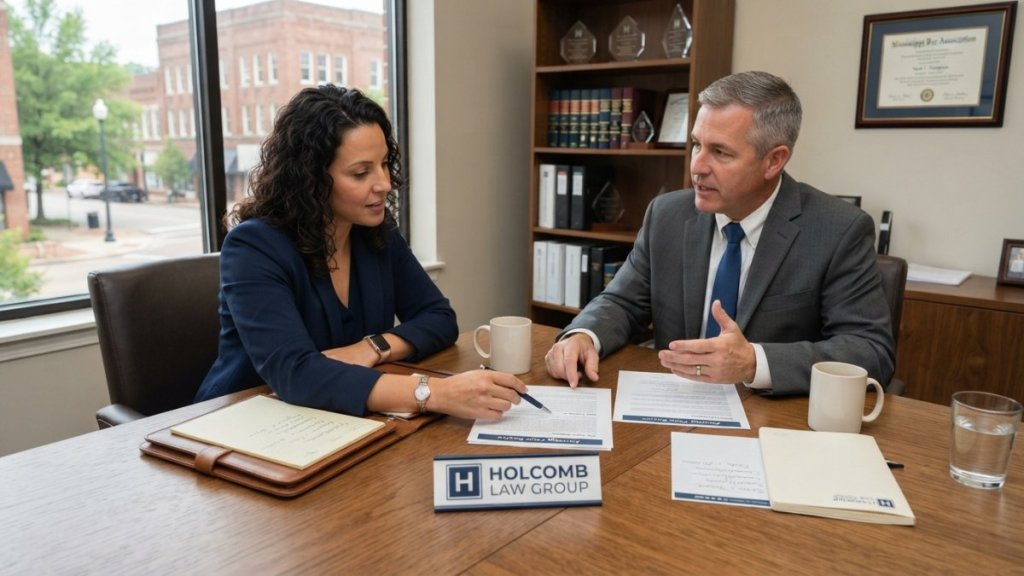
Preparing for Your First Meeting with Holcomb Law Group
A first meeting should leave you with a clear understanding of your legal position, the available options, and the next steps.
Bring your documents and your questions. The firm’s services include probate and estate administration, commercial litigation, insurance defense and coverage, business collections, and mediation for clients across Mississippi, Tennessee, and the Southeast.
The firm holds an AV rating from Martindale-Hubbell and is listed in The Best Lawyers in America.
If you are facing a legal matter and want counsel that prepares thoroughly and communicates clearly, we are ready to help. Holcomb Law Group offers experienced representation in probate, commercial litigation, insurance defense, and mediation, with a commitment to steady judgment and fair dealing.
Frequently Asked Questions
What is the difference between an attorney and a lawyer?
In the United States, the terms are largely interchangeable in everyday use. Technically, a lawyer is anyone who has completed law school and earned a Juris Doctor degree. An attorney is a lawyer who has also passed the bar examination, been admitted to a state bar, and is licensed to practice law, represent clients in court, and give legal advice. When you choose an attorney, you are selecting a licensed professional authorized to act on your behalf.
How do I verify an attorney’s credentials?
Start with your state bar association’s online directory, which lists active license status, admission date, and any public disciplinary actions. You can also check Martindale-Hubbell for peer ratings and The Best Lawyers in America for recognition. Ask the attorney directly about their practice area experience and case history. A reputable firm will answer these questions openly and provide references when appropriate.
What should I bring to an initial attorney consultation?
Bring any documents related to your legal matter, such as contracts, correspondence, court notices, insurance letters, or business records. Prepare a written timeline of events and a list of questions to ask an attorney, including fees, communication preferences, and expected next steps. Having your attorney consultation checklist ready helps you compare firms and make a confident decision.
How can I maintain effective attorney-client communication?
Agree on communication methods and response times at the outset. Ask who your primary contact will be and how often you should expect updates. Keep your own records of emails and phone calls, and raise concerns early if responses lag. Strong attorney-client communication is a two-way street, and clear expectations from the first meeting prevent most misunderstandings.
Ready to choose the right attorney? Holcomb Law Group offers steady, well-prepared counsel across Mississippi and Tennessee.

